The Ultimate
Vacay Power Play
A $20,000 European vacation.
Three credit cards. Three signup bonuses. One strategy that turned everyday spending into business class flights, five-star hotels, and a Mediterranean cruise. Use the free Fruglar card tracker to monitor every bonus and credit in your stack.

Alaska Miles Are the Best-Kept Secret in Travel Hacking
Most people think travel miles are for free economy seats when you can't find a cheap ticket. Alaska miles are something else entirely. The redemption value on flights — especially international — is quietly one of the best in the industry. That shot above? Condor business class — lie-flat seats, Boston to Frankfurt — booked entirely on Alaska points.
A Planned Cruise Payment Helped Unlock Our Condor Business-Class Award
We were already booking a Virgin Voyages Mediterranean cruise — $3,300 that we were going to spend regardless. Instead of putting it on a random card, we routed it through a brand new Alaska Atmos card. That single decision unlocked 80,000 bonus points — and eventually put us in Condor business class on a lie-flat seat from Boston to Frankfurt for $70 out of pocket.
- → Historical offer used on this trip: spend $3,000 in 90 days, earn 80,000 bonus points. Current public terms differ.
- → We were already paying $3,300 for our cruise. Routed it through the Alaska card.
- → Bonus unlocked. Zero extra spend required.
- → Bought 35,000 additional points on a points sale for $700.
- → Total: 115,000+ points. Enough for two business class seats to Europe.
- ✈️ Anniversary $99 Companion Fare after $6,000 in eligible prior-year card spend
- 🧳 Free checked bag for you + up to 6 guests on same reservation
- 🪑 Preferred boarding for you + up to 6 guests

Want to Know How We Take a BOGO Universal Trip Each Year?
Trip 1: we pay for the full Universal Orlando trip. Trip 2: same family, same parks, same Express Pass — effectively free. Here's the exact math. It's all about timing, and time of year makes a huge difference in price. Our BOGO trip is typically off-peak, around September through November.
- ✅ 4 Annual Passes (USF + IOA)
- ✅ 3 nights Cabana Bay (value resort)
- ✅ 1 night Hard Rock Hotel (Premier)
- ✅ 2 days Express Unlimited — free via Hard Rock stay
- ✅ 3 park days
- ✅ Annual Passes already owned → $0
- ✅ Hard Rock night → a portion of the $300 Venture X travel credit → $0
- ✅ Cabana Bay nights → remaining Venture X travel credit + 10,000 anniversary points + points from Trip 1 spend → $0
- ✅ Express Unlimited → free via Hard Rock stay → $0
- $300 Capital One Travel credit
- 10,000 anniversary miles (~$100)
- $120 TSA PreCheck / Global Entry
- Unlimited Capital One Lounges
- Unlimited Priority Pass
- 17 transfer partners (mostly 1:1)

How We Came Out Ahead in Vegas, at Least on Hotels and Food
On our latest trip, we paired a Bellagio Fine Hotels + Resorts night with a Conrad Las Vegas at Resorts World stay backed by Hilton Aspire benefits. The result was two luxury hotel stays, $310 in usable food credits, complimentary valet, early check-in, late checkout and room upgrades for about $50 in lodging cash on this trip.
Strategy 1: Platinum + Aspire
Two properties. Two benefit systems. We used the Platinum Card's Fine Hotels + Resorts program at Bellagio, then Hilton Aspire and Diamond benefits at Conrad Las Vegas. The value came from combining benefits we already held, not from booking two copies of the same offer.
Strategy 2: Platinum-Only FHR
Use an available Platinum Hotel Credit on one eligible prepaid Fine Hotels + Resorts stay, then pay for a second FHR stay at a different participating hotel. The second room is a real cost, but both eligible stays receive the FHR benefit package.
Favorite spots to burn those dining credits:
- $600 Hotel Credit (FHR / Hotel Collection)
- $400 Resy dining credit ($100/quarter)
- $300 Digital Entertainment
- $209 CLEAR+ membership
- $200 Airline Fee Credit
- $200 Uber Cash
- $120 Uber One membership
- $300 lululemon credit
- $155 Walmart+ credit
- 1,550+ airport lounges (Centurion, Delta Sky Club, Priority Pass)
- Fine Hotels + Resorts: breakfast for two, a property-specific experience credit and guaranteed 4 p.m. checkout
- The Hotel Collection: a property-specific experience credit on qualifying two-night stays
Now imagine using all three together.
Each card owns a lane: Alaska handles the flights. Venture X handles the big travel splurges. Amex Platinum handles the hotels and dining. Stack them on one trip and the numbers get ridiculous.
The Euro Trip That Proved the System
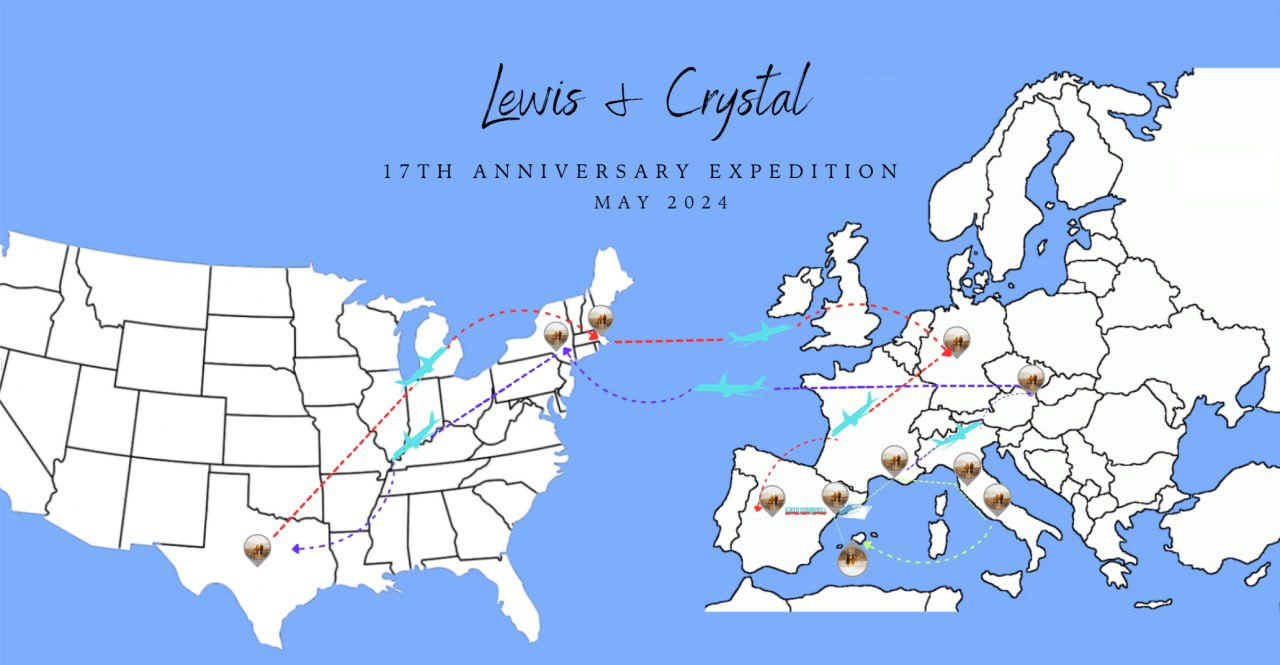
Business class to Europe. Five-star hotels. A Mediterranean cruise. Six countries. This is what all three cards working together looks like. Explore the underlying tactics in the Flights playbook, Hotels playbook, and Virgin Voyages section.
The Itinerary
Every Receipt
The Full Ledger
The Catch — Sort Of
Annual fees are real. Signup bonuses require real spend. Here's the complete picture — including what these cards cost and what they return.
The honest truth: To unlock all three signup bonuses, you need to spend approximately $15,000 across three cards within their respective windows (90 days for Alaska, 3 months for Venture X, 6 months for Amex). This only works if you route existing spending — bills, insurance, travel, everyday purchases — through the cards, and pay them off in full each month. These strategies are not for people carrying a balance. Interest charges will erase every benefit listed on this page.
Meeting the Spend — Without Going Into Debt
~$15,000 across three cards sounds like a lot. Here's how Fruglars do it without changing their lifestyle.
🗓️ Time It Right
Apply for a new card right before a big planned expense — insurance renewals, property taxes, home repairs, medical bills. These are purchases you'd make anyway. Route them through the new card, pay it off, bonus unlocked.
🧾 Prepay Bills & Subscriptions
Annual insurance premiums, car registration, professional memberships, streaming services, phone bills — prepay a year upfront on the new card if your providers allow it. Stack multiple categories to hit the threshold faster.
🏠 Pay for Others, Get Reimbursed
Group trips, family vacations, friend dinners — put it on your card, collect reimbursements via Venmo/Zelle. Everyone wins: you hit your spend, they pay their share. Works especially well for multi-family travel.
💼 Self-Employed? Business Expenses
Quarterly estimated tax payments via IRS.gov accept credit cards (fee ~1.87%). Ad spend, software, equipment, contractors — all eligible. Even at 1.87% fee, if your bonus is worth $750+, the math is usually still positive.
🎁 Gift Card Stacking
Buy gift cards for stores you shop at regularly — grocery, Target, gas stations, home improvement. No additional spend, just moving your future purchases forward. Don't buy more than you'll actually use.
⏱️ One Card at a Time
Don't open all three at once. Space applications 3-6 months apart. This protects your credit score, gives you time to meet each spend window cleanly, and keeps the strategy manageable. The $15k is spread over about a year when done properly.
Pay your balance in full every month. Credit card interest rates will destroy every benefit on this page. These strategies only work for people who treat credit cards as a payment tool, not a loan.
Frequently Asked Questions
What are the best credit cards for Virgin Voyages?
There is no universal best card for Virgin Voyages. Fruglar's historical case used a planned cruise payment toward an Atmos welcome offer, then used separate cards for flights and hotels. Compare the current offer, annual fee, payment protection and the benefits you will actually use, and pay the statement in full.
What are the best credit cards for Universal Orlando?
There is no single best card for Universal Orlando. In Fruglar's two-trip example, the Venture X travel credit and anniversary miles helped offset eligible hotel bookings, while Annual Pass reuse and a Premier hotel provided the actual ticket and Express value. Compare portal pricing, the annual fee and every remaining trip cost.
How do you take a $20,000 vacation for under $5,000?
The Fruglar card stack uses three cards — Alaska Airlines Visa, Venture X, and Amex Platinum — to stack signup bonuses, meet spend requirements with everyday purchases, then redeem points for flights and use annual travel credits to offset cruise and hotel costs. The full breakdown is on this page.
Is the Amex Platinum worth it for travel?
It depends on whether the traveler naturally uses enough current benefits to exceed the annual fee. Hotel, dining, airline, CLEAR, entertainment and other credits have separate enrollment, timing and merchant rules. Do not count a credit at face value unless it replaces spending you would otherwise make.
Use the free Fruglar Tracker to track your cards in the credit tracker, monitor signup bonus progress, expiring credits, and your real savings on every trip.
Open the card tracker — free →Ready to Plan Your Own Power Play?
We're CLIA Certified Travel Agents and Virgin Voyages Gold Tier First Mates. Tell us where you want to go — and we'll help you figure out how to get there for a fraction of retail. Free consultation, no pressure.
Book a Free Consultation